
The Evolution of Restaurant Technology: How POS and Kiosk Integration is Reshaping Operations in 2024
How POS and kiosk integration streamlines restaurant operations, improves efficiency, and enhances customer experience.
As we move further into 2024, the restaurant industry is witnessing a significant transformation, driven largely by advancements in Point-of-Sale (POS) technology and the integration of self-service kiosks. For restaurant owners, understanding these trends is crucial for staying competitive and improving profitability.
The Changing Face of POS Systems
Gone are the days when POS systems were merely used for processing payments. Today’s POS solutions serve as comprehensive transaction engines, central to streamlining operations, providing data-driven insights, managing inventory and workforce, ensuring security, and much more. This evolution underscores a fundamental shift towards leveraging technology to meet the growing demands of modern diners.
According to Hospitality Technology’s recent survey on POS software trends, restaurant operators are increasingly viewing their POS systems as pivotal components that enhance efficiency, improve customer experiences, and drive profitability. The survey reveals a robust appetite among restaurant operators to enhance their POS capabilities, with 84% of respondents planning to incorporate new functionalities or expand existing ones.
The Rise of Self-Service Kiosks
Complementing the advancements in POS technology is the growing adoption of self-service kiosks. In 2024, a substantial 85% of restaurant operators are prioritizing the implementation of self-service technologies, recognizing the operational efficiencies and improved customer experiences they bring.
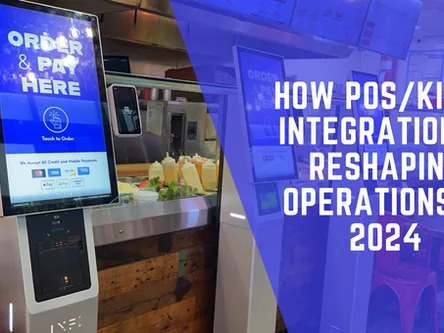
The integration of kiosks with existing POS systems is proving to be a game-changer for many restaurants. Companies like INFI Kiosks are at the forefront of this trend, offering solutions that seamlessly integrate with leading POS systems. These kiosks not only expand the capabilities of traditional POS setups by empowering customers to place orders independently, access menus, and process payments efficiently, but also address the critical need for integration with other backend systems.
Key Benefits of POS and Kiosk Integration
- Enhanced Operational Efficiency: The combination of advanced POS features and self-service kiosks streamlines order processing, reduces wait times, and minimizes errors.
- Improved Customer Experience: Self-service options cater to customers who prefer a quick, contactless ordering process, while freeing up staff to provide more personalized service to those who need it.
- Data-Driven Insights: Integrated systems provide valuable data on customer preferences, ordering patterns, and operational efficiency, enabling informed decision-making.
- Increased Revenue: Kiosks have been shown to increase average order values through consistent upselling and cross-selling, contributing directly to the bottom line.
- Adaptability to Market Changes: Cloud-based POS solutions (adopted by 68% of surveyed restaurants) offer the flexibility to quickly adapt to changing market conditions and customer expectations.
Emerging Trends in POS Functionality
As we look at the evolving landscape of POS systems, several key trends are emerging:
- Mobile Solutions: 50% of operators are planning to deploy POS solutions on mobile devices, aiming to enhance agility and guest satisfaction.
- Tablet-Based Software: 83% of restaurants are adopting tablet-based POS software for increased flexibility and improved table-side service.
- AI-Powered Capabilities: 35% of operators are exploring AI integration in their POS systems, opening up possibilities for predictive analytics and personalized customer experiences.
- Cloud-Based Systems: The shift towards cloud-based POS solutions (68% adoption rate) is enabling real-time data access and improved system reliability.
Leveraging Data for Strategic Advantage
One of the most significant benefits of modern POS and kiosk systems is the wealth of data they provide. Restaurants are using this data to:
- Engage customers digitally (85% of operators)
- Drive loyalty programs (60%)
- Tailor promotions and menus (54%)
- Optimize staffing (50%)
This data-driven approach not only enhances customer engagement and personalization but also empowers decision-making across all facets of restaurant management.
The Importance of Integration
As restaurants adopt these new technologies, integration becomes crucial. According to recent surveys, 85% of restaurant operators prioritize integration with backend systems such as inventory management, CRM, and kitchen automation. This holistic approach ensures real-time data synchronization and operational efficiency throughout the restaurant.
Industry Partnerships Driving Innovation
The collaboration between POS providers and kiosk manufacturers is accelerating innovation in the industry. For example, INFI Kiosks recently partnered with LightSpeed POS to launch an innovative POS/Kiosk product. This collaboration aims to elevate the industry standard by integrating advanced kiosk technology with renowned POS software, offering seamless order management, robust data analytics, and enhanced customer engagement capabilities.
Looking Ahead
As restaurants navigate an increasingly competitive market, the role of integrated POS and kiosk systems will continue to evolve. Embracing these advanced functionalities and harnessing the power of data will be crucial in staying ahead. By investing in cutting-edge solutions that integrate seamlessly and empower operational excellence, restaurants can not only meet but exceed customer expectations while driving sustainable growth.
The future of restaurant efficiency lies in the intelligent adoption of technologies that not only streamline operations but also enhance the overall dining experience. For restaurant owners, the key is to view these technological advancements not as mere tools, but as strategic assets that can transform their operations and drive long-term success.
As we move forward in 2024 and beyond, those who embrace these innovations will likely find themselves at the forefront of a more efficient, customer-centric, and profitable restaurant industry.
*All bold & blue text taken from a recent Hospitality Technology research survey ‘2024 POS Software Trends’
See what INFI can do for your restaurant
Add self-ordering, online ordering, loyalty, and marketing on top of the POS you already run.
Book a Demo