

QSR self-ordering kiosks that kill the line and lift every ticket
Self-order kiosks ring bigger checks on the POS you already run.
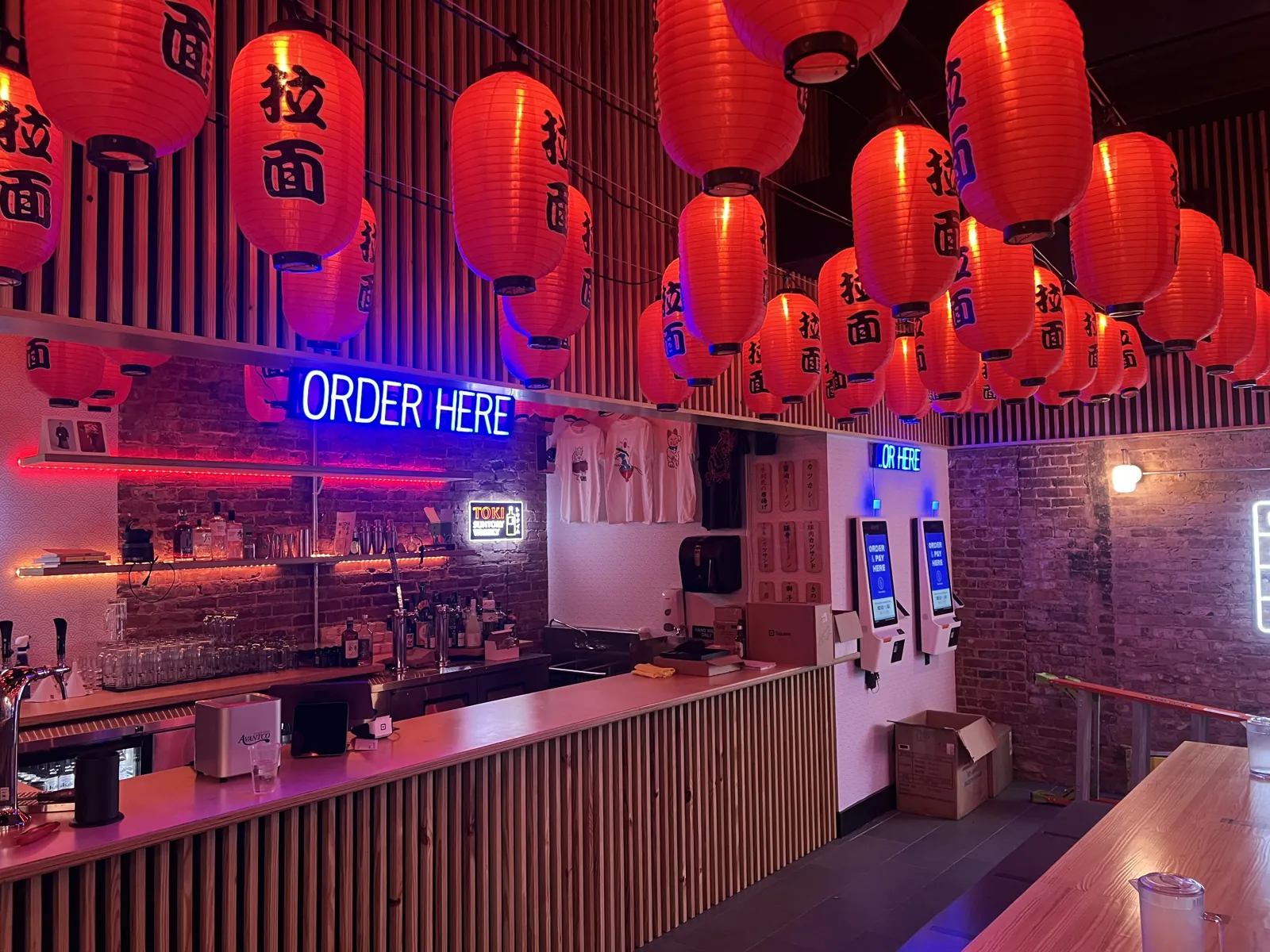
Built for how a QSR actually runs.
The K5 parallelizes the line — an extra cashier who never clocks out.
INFI's AI adds a combo to every order — about a 20% bigger ticket.
Run online, mobile, and QR on your own Stripe or Square — keep the 15–30%.
One menu. Every channel. Synced before the line moves.
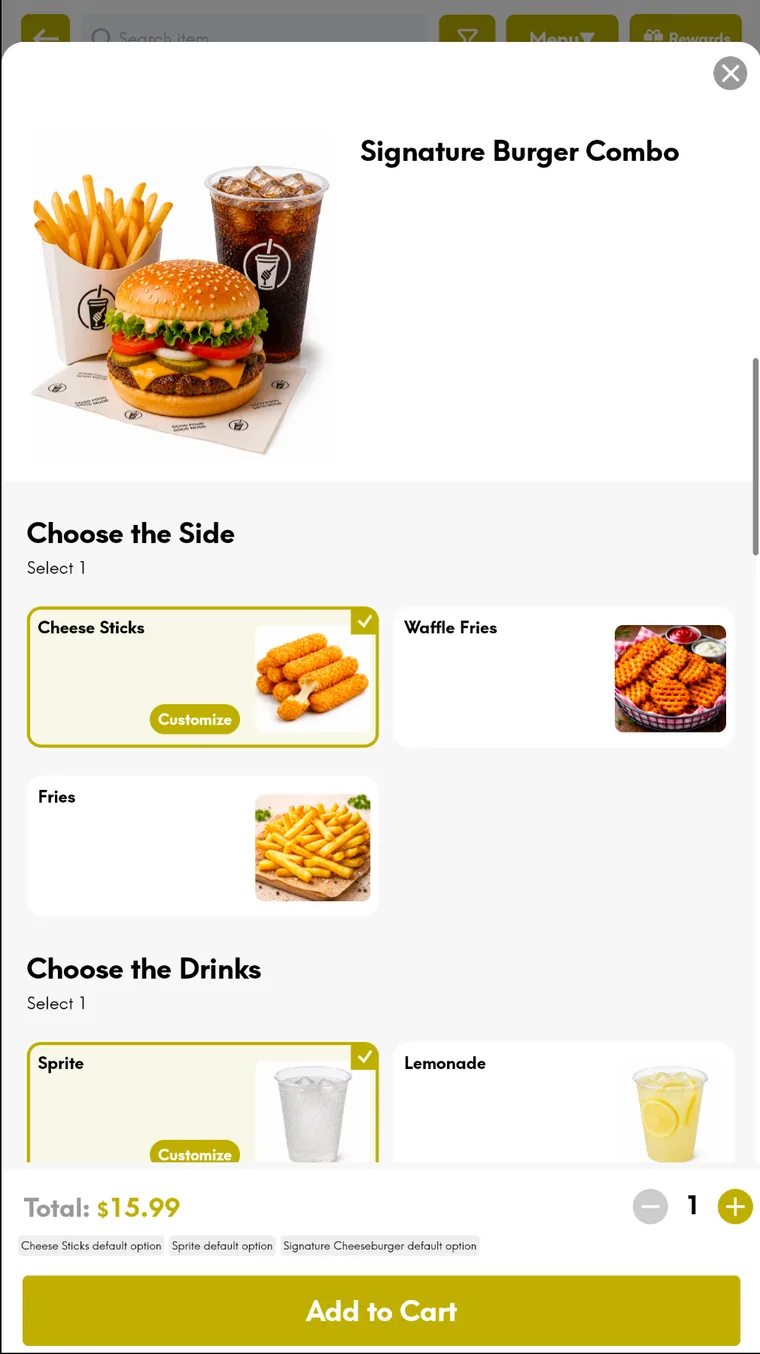
Guests build it their way and sold-out items 86 everywhere in under 10 seconds.
- Deep modifiers: protein, bread, sauce, combos, min/max
- Sold-out 86 syncs kiosk, online & QR in <10s
- Bilingual on screen: English, Spanish & more
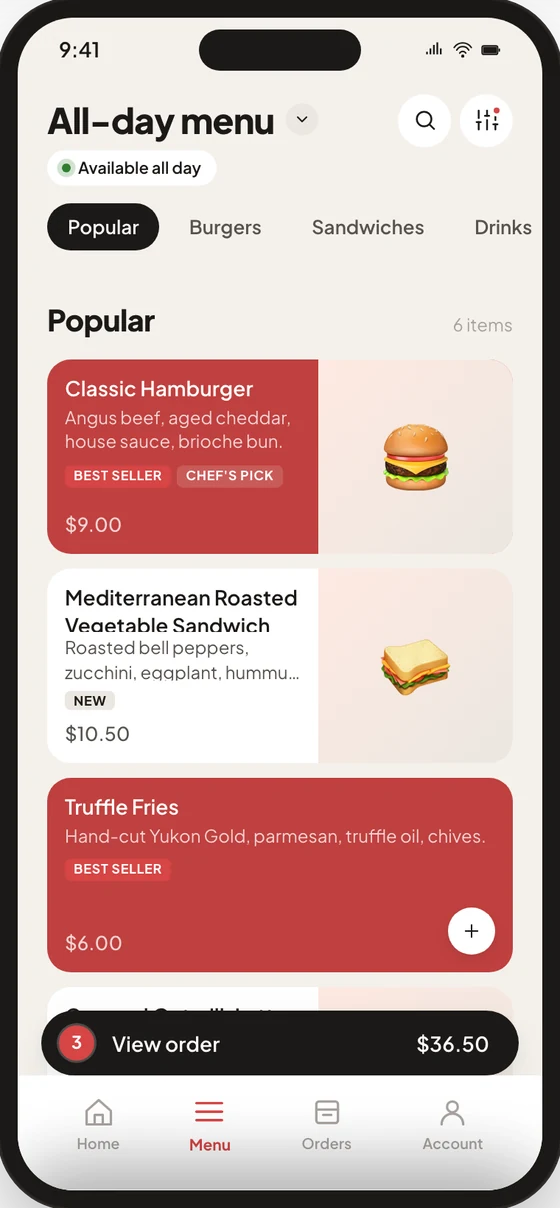
Own your online orders — and the 15–30% you used to lose.
Branded online, mobile, and QR run on your own Stripe or Square — the money stays yours.
- Branded web, mobile & QR on your own processor
- $0 commission — keep 100% of every online ticket
- Built-in loyalty + one-tap reorder for direct repeat
INFI, live in real QSR & Fast Casual.
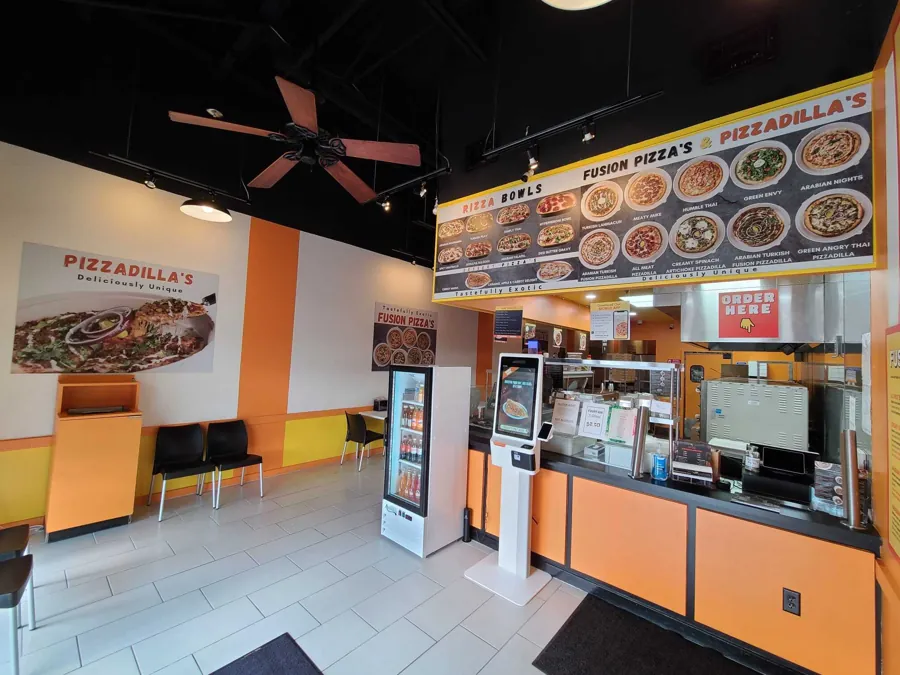
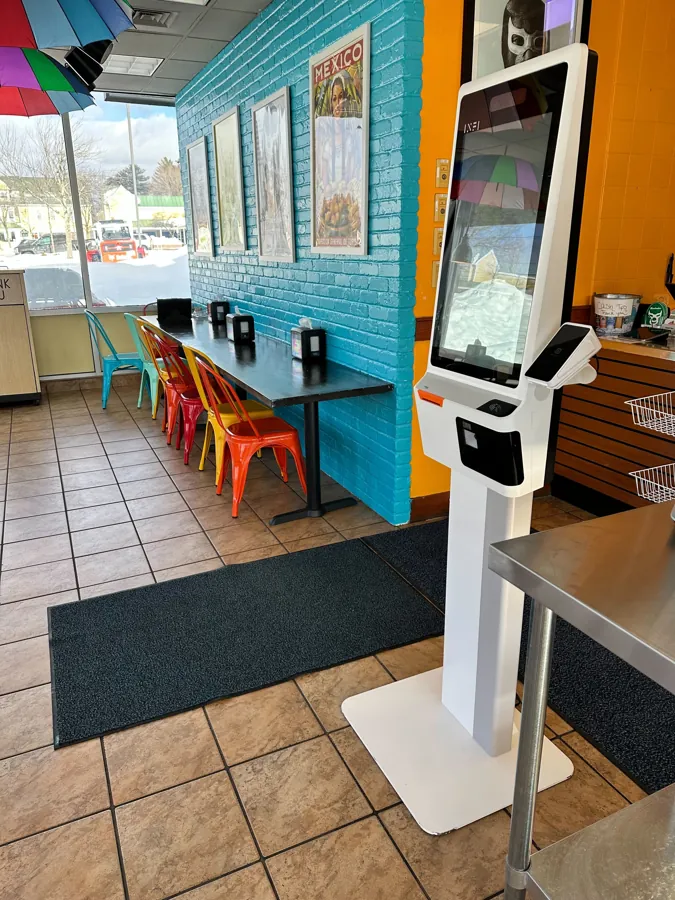
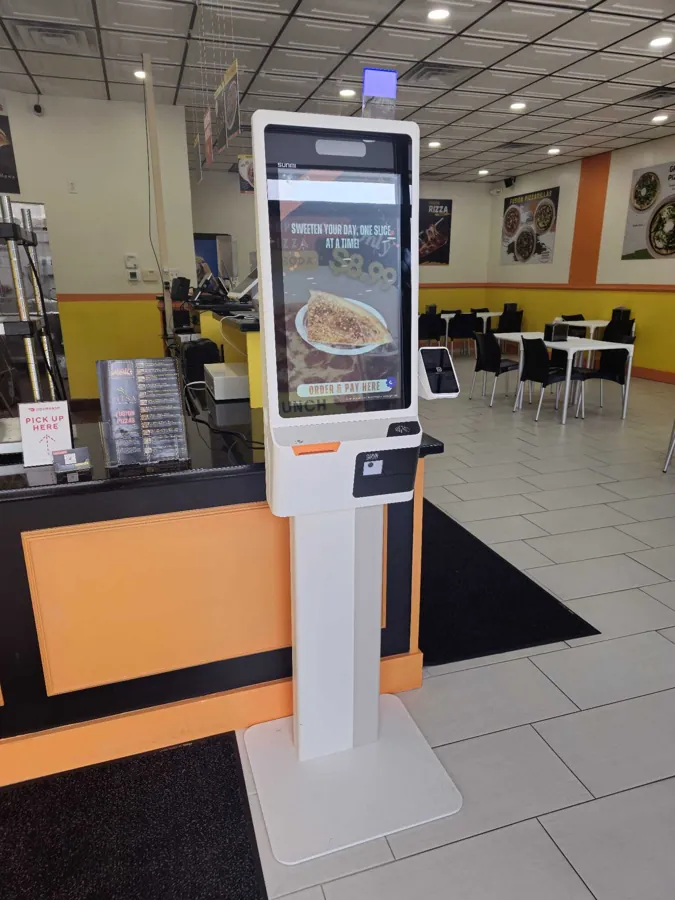
Real QSR & Fast Casual operators. Real results.
“Average ticket size jumped noticeably once INFI started surfacing smart upsells at checkout, and our line congestion during lunch rush basically disappeared.”
“About half our orders come from the kiosk now.”
A QSR self-ordering kiosk turns your busiest counter into a second register that never clocks out — one that greets every guest, rings the order exactly as built, and asks for the combo on every single ticket. INFI runs that kiosk on restaurant-grade hardware and pushes each paid order straight into the Square, Toast, or Clover POS you already run. The payoff for quick-service and fast-casual operators is a shorter line, a bigger average check, and none of the 15–30% marketplace commission.
How a QSR self-ordering kiosk actually works at the counter
The whole flow is built for speed at peak. A guest walks up to a branded self-ordering kiosk showing your full photo menu — live from your POS, in English, Spanish or Chinese — with no line and no one tied up taking the order. They build it their way through a deep modifier tree, tap through an AI-suggested combo, and pay however they want. The finished order lands in the same ticket queue your kitchen already watches, so nobody re-keys anything.
Fast food is a customization business — industry surveys find roughly 72% of guests expect to tailor their order — and a screen handles that better than a rushed cashier. INFI's self-ordering kiosks are modeled around exactly the levers a QSR menu needs:
- Deep modifiers — protein, bread, sauce, size, combos, with min/max and required rules so every build rings correctly the first time.
- AI Smart Cross-Sell — a combo, side, or upgrade suggested on every order, adding about $1–2 to each ticket without slowing the line.
- Real-time 86ing — mark an item sold out once and it disappears from kiosk, web, and QR in under 10 seconds.
- Bilingual by default — the menu shows in English, Spanish, and more, so you stop losing guests at the screen.
The hardware is restaurant-grade, not a tablet in a stand. The K5 family comes as countertop, floor-standing, and wall-mount units, plus an outdoor-hardened sibling built to keep selling in sun, heat, and rain — and each takes Apple Pay, EMV chip, and QR tap, dip, or scan. Put two of them beside your counter and the K5 parallelizes the line like an extra cashier who never calls in sick. That is why counter-service operators like Pink Owl Coffee now see about half of their orders come through the kiosk.
The economics: bigger checks, redeployed labor, zero marketplace tax
Kiosks are usually pitched as a labor play, but the reason they pay for themselves is revenue on every order. A screen never gets tired, never gets rushed, and never skips the upsell because the line is ten deep — so the attach rate that quietly collapses during a lunch rush holds on every ticket instead.
The numbers are consistent across the industry. Modern Restaurant Management reports kiosks drive a ~21% increase in average order size — roughly $5 more per transaction, and self-ordering kiosks broadly lift average order value 15–30%. INFI's own merchants land inside that band. Real deployments bear it out: PJ's Coffee lifted average order value 45%, Juice Press saw roughly 15% more per order, and Oak View Group venues doubled basket size. INFI's own QSR and fast-casual customers land in the same range — Boricua Bites logged about a 9.6% average-ticket lift in its first week, with ATV up around 20% on autopilot.
Labor savings are real, but they come from reshaping labor, not deleting it. A kiosk absorbs order-taking and payment — the tasks that force you to schedule extra front-of-house bodies just to survive peak — so you can run the same rush with one or two fewer people at the counter. Reduced order errors mean fewer remakes and comps; redeployed staff run food, keep the floor clean, and speed up throughput. That is more orders per hour without adding headcount.
Then there is the money you stop losing. Delivery marketplaces tax 15–30% of every order they touch. When you move guests onto your own branded online ordering, mobile, and QR — running on your own Stripe or Square — you keep 100% of every direct ticket, $0 marketplace commission. Built-in loyalty and one-tap reorder turn those first-time kiosk guests into direct regulars, so the check lift compounds instead of leaking back to a third party.
Keep the POS you already run — Square, Toast, Clover, Lightspeed
You do not need to replace your point-of-sale to add a kiosk. If a vendor tells you the only path is switching registers, that is a sales tactic, not a technical requirement. INFI is a growth platform that layers on top of the POS you already run — Square, Toast, Clover, Lightspeed, or HungerRush — rather than ripping it out. Your POS stays the system of record for the menu, payments, and reporting; the kiosk simply becomes another ordering channel feeding the same kitchen.
Strip away the pitch and a kiosk needs a short list of things from your existing system: your menu and 86'd status synced so you edit in one place, order injection into your current ticket queue, payment, and kiosk sales landing in your normal day-end totals. INFI CONNECT handles all of it with a real integration mapped per POS:
- Bidirectional sync, POS ↔ INFI — change a price on your register and it is live everywhere within 10 seconds.
- One menu of record — items, modifiers, combos, prices, and taxes flow straight from the POS, so there is no double entry.
- Clean tickets back to the line — every kiosk order flows to the POS and kitchen as a normal ticket, with no re-keying.
This matters most against a POS's own native kiosk. Toast Kiosk, for example, is tightly integrated — but it runs on Toast's hardware, Toast's software, and Toast's upgrade cycle, so you inherit its lock-in and its per-screen fees. INFI doesn't sell a POS, so it has no reason to pull you off the register your team already knows. Pair the kiosk with an INFI kitchen display and the same order stream that hits the counter also expedites in the back, so throughput scales with the extra volume the kiosk brings in.
One menu, every channel — kiosk, online, mobile, and QR
The biggest hidden cost of a cheap kiosk is a separate menu. If your kiosk runs its own price list apart from your online ordering and your POS, you pay in labor every time something changes and you have to update it in three places. INFI removes that entirely: the kiosk, your branded website, your mobile app, and QR ordering all read from a single menu of record. Edit a price or 86 an item once, and every channel reflects it before the next ticket.
For a QSR, that single stream is what makes multi-channel worth running. Self-ordering kiosks, AI-driven upselling, an integrated kitchen display, and multi-channel ordering are the four restaurant technologies that consistently pay for themselves — and they only compound when they share one menu, one order feed, and one guest profile. A regular can order at the kiosk on a busy Friday, reorder from their phone on Monday, and hit the same loyalty balance both times.
Because it is software layered on the stack you already own, the setup math works at one or two kiosks — not just at fifty. Commercial-grade kiosks commonly reach payback in 6–18 months, and faster where the check lift is strong, since the AI upsell and combo attach start working on day one. You can see how all of it fits together on the INFI platform, and price a kiosk for your own volume on the pricing page. The point is simple: your POS runs the register, and INFI runs your growth on top of it.
INFI vs. your POS's built-in kiosk
| INFI | POS's native kiosk | |
|---|---|---|
| Commission on direct online orders | $0 — web, mobile & QR run on your own Stripe or Square, you keep 100% | Native ordering, but direct online often carries per-order fees |
| AI upsell | AI Smart Cross-Sell adds a combo to every order — about +$1–2 per ticket | Manual or basic modifier prompts; upsell depends on how staff set it up |
| POS sync | Bidirectional, one menu of record, live in under 10 seconds | Native to that one vendor's stack |
| Multi-channel | Kiosk + online + mobile app + QR on a single shared menu | Kiosk within that vendor's ecosystem only |
| Hardware | K5 countertop, floor & wall mount, plus outdoor-hardened — flexible | Locked to the vendor's own kiosk SKU |
| Setup | Layers on top of Square, Toast, Clover, Lightspeed or HungerRush — keep your register | Requires that vendor as your POS system of record |
Frequently asked questions
How much does a QSR self-ordering kiosk cost?
Do I need a new POS to add an INFI kiosk?
What kiosk hardware does INFI use?
How does the menu stay in sync across channels?
How fast does a QSR kiosk pay for itself?
See INFI running on your QSR menu.
15 minutes, built around your POS and modifiers.