

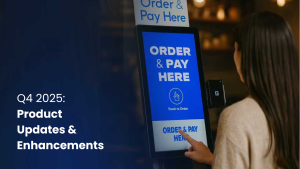

What Is a Tabletop Kiosk?
Definition
A tabletop kiosk is a compact, customer facing touchscreen device designed to sit directly on a dining table, counter, or booth. These devices are commonly used in restaurants and hospitality environments to allow guests to browse menus, place orders, and complete payments from their seats. Tabletop kiosks typically integrate with a restaurant point of sale system to send orders directly to the kitchen.
What Tabletop Kiosks Are Used For
Tabletop kiosks are used to support table service workflows by giving guests more control over ordering and payment during their dining experience. They are commonly deployed to reduce wait times, simplify reorders such as drinks or desserts, and allow guests to pay without waiting for a server. In many environments, tabletop kiosks complement staff rather than replace traditional service.
How a Tabletop Kiosk Works
A tabletop kiosk follows a straightforward ordering process:
- Guests interact with the touchscreen at their table to view the digital menu.
- Items can be selected and customized based on available options.
- Payment is completed directly at the table using integrated card readers or contactless payment methods.
- Orders are sent through the point of sale system and routed to the kitchen display system or printer.
- In some setups, guests can continue placing additional orders during the meal through an open tab or reorder function.
This workflow reduces friction between ordering and fulfillment while maintaining a seated dining experience.
Key Benefits of Tabletop Kiosks
Common benefits of tabletop kiosks include:
- Faster service: Guests can order and pay without waiting for staff.
- Improved order accuracy: Orders are entered directly by the customer.
- Increased average spend: Easy reordering and visual prompts encourage add ons.
- Operational efficiency: Staff spend less time on transactional tasks.
- Enhanced guest experience: Customers have more control and transparency during their visit.
Common Features and Capabilities
Most tabletop kiosks include a core set of features designed for table service environments:
- Tablet based hardware: Often built around secure, mounted tablets.
- Integrated payments: Support for chip, contactless, and mobile wallet payments.
- System connectivity: Orders and payments flow into existing point of sale and reporting systems.
- Flexible mounting options: Devices can be fixed to tables or used in portable configurations.
- Optional guest engagement tools: Some systems support surveys, loyalty programs, or feedback collection.
Where Tabletop Kiosks Are Used
Tabletop kiosks are most commonly used in:
- Casual dining restaurants.
- Bars and pubs.
- Table service and hybrid service environments.
- Hospitality venues seeking faster table turnover.
They are particularly well suited for environments where guests remain seated for extended periods.
Tabletop Kiosks vs Self-Ordering Kiosks
Tabletop kiosks differ from freestanding self ordering kiosks in both form and use case. Tabletop kiosks are smaller devices designed for ongoing, at table interaction, while self ordering kiosks are typically larger, freestanding units placed near entrances or queues for initial ordering. Tabletop kiosks support reordering and pay at table experiences, whereas self ordering kiosks are optimized for high volume throughput and line reduction.
Tabletop Ordering vs Mobile Ordering
Tabletop ordering also differs from mobile ordering systems that rely on a guest personal smartphone. Tabletop kiosks provide a dedicated, in restaurant device that does not require app downloads or QR code scanning. Mobile ordering offers greater flexibility for off premise or order ahead scenarios, while tabletop kiosks focus on improving the on site dining experience.
Examples of Tabletop Kiosk Providers
Several technology providers offer tabletop kiosk solutions designed for restaurant environments. Examples include:
- Ziosk: Known for large scale deployments in casual dining with at table ordering and payment.
- Square: Provides tablet based hardware that can be configured for tabletop ordering.
- INFI: Offers a restaurant growth platform that integrates tabletop, mobile, and online ordering into one system.

