
5 Digital Menu Mistakes Pizza Restaurants Make
...And how to fix them. Learn the top mistakes restaurants make with a digital pizza menu and how a better design can increase sales.
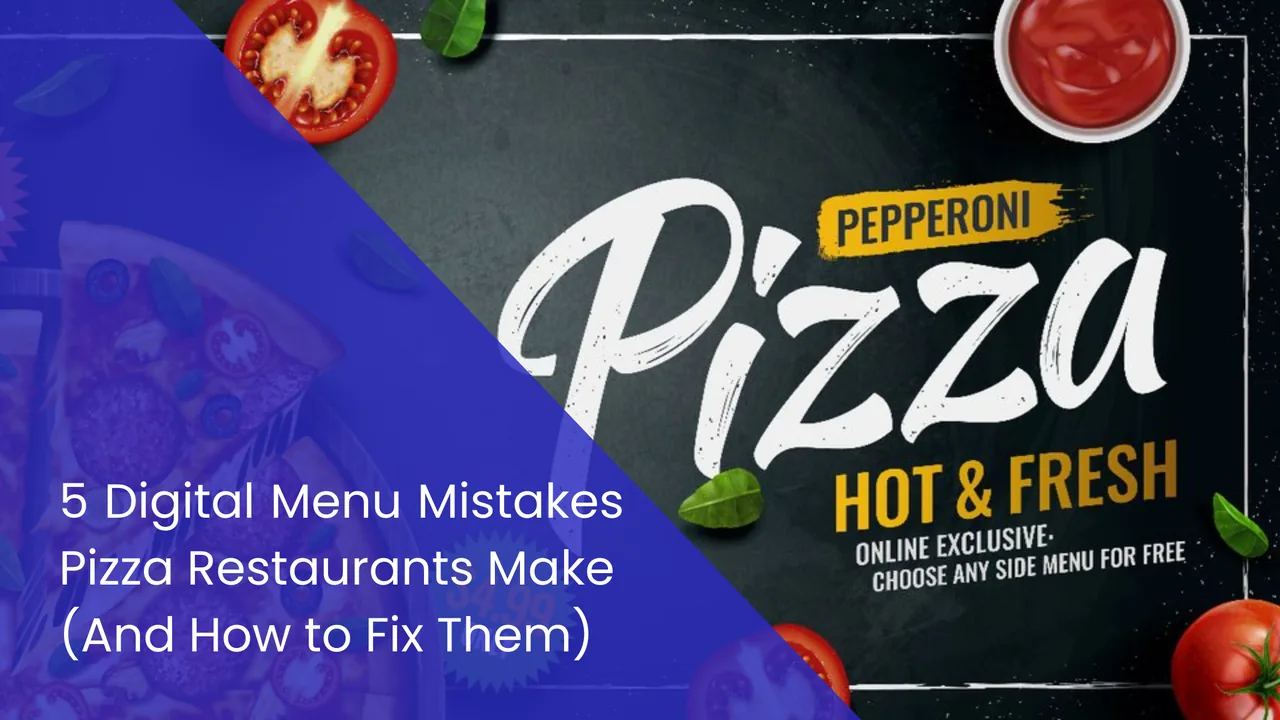
Digital menus have quickly become a staple in modern restaurants—especially in the pizza industry, where speed, clarity, and visual appeal play a major role in the customer experience. From counter service screens to drive-thru boards and online ordering displays, digital menus help restaurants update items instantly, promote specials, and improve ordering efficiency.
But simply switching from a printed menu to a screen isn’t enough. If digital menus are poorly designed or strategically overlooked, they can actually slow down ordering and reduce sales.
A recent industry article from Fast Casual highlighted some of the most common mistakes pizza restaurants make when implementing digital menus. Below, we break down these mistakes and share practical ways operators can improve their digital menu strategy.
For the original analysis, you can read the full article here.
1. Overloading the Screen with Too Many Items
One of the most common mistakes pizza restaurants make is trying to display every single menu item on one screen.
While it may seem helpful to show the entire menu, the result is often the opposite. When customers are faced with too many choices and too much information, it slows down decision-making and creates confusion.
Customers typically scan digital menu boards quickly—often in just a few seconds. A cluttered screen forces them to pause and search for items, which can slow down lines and frustrate guests.
How to fix it:
- Highlight your most popular and profitable items
- Group items into clear categories
- Use multiple screens or slides for larger menus
- Keep descriptions short and easy to read
Digital menus should simplify decisions, not complicate them.
2. Ignoring Visual Hierarchy
Every menu should guide customers toward certain items. Without a clear visual hierarchy, every item competes equally for attention, and customers often default to whatever they notice first rather than what the restaurant wants to sell.
Strategic menu design can significantly influence purchasing behavior. Placement, size, and spacing help guide the eye and influence ordering decisions.
How to fix it:
- Use larger text or images for featured items
- Place high-margin items in prominent positions
- Use spacing, color, and layout to direct attention
- Create clear sections like “Specialty Pizzas,” “Combos,” or “Fan Favorites”
A well-designed digital menu works like a silent salesperson.
3. Rotating Menu Screens Too Quickly
Digital menus often cycle through multiple slides to display different categories or promotions. But if screens rotate too quickly, customers may not have enough time to read the content.
This can cause confusion and lead to rushed or incomplete orders. Customers might miss key items or promotions entirely.
How to fix it:
- Allow enough time for customers to fully read each slide
- Keep rotations slow and predictable
- Limit the number of rotating screens
- Display core menu items consistently
The goal is to support quick decision-making—not create a guessing game.
4. Using Fonts or Colors That Reduce Readability
Design choices that look attractive on a laptop or design file may not work well in a restaurant environment. Thin fonts, low contrast colors, or overly stylized typography can make menu items difficult to read—especially from a distance.
Customers shouldn’t have to squint or step closer to understand your menu.
How to fix it:
- Use bold, clean fonts that are easy to read from several feet away
- Choose high-contrast color combinations
- Keep text large and simple
- Avoid decorative fonts for menu items
Clear readability is essential for fast-paced restaurant environments.
5. Treating Digital Menus Like Static Displays
One of the biggest missed opportunities is treating digital menus like digital versions of printed boards. Unlike static menus, digital menus can be updated instantly and used strategically to drive sales.
Restaurants that fail to take advantage of these capabilities miss opportunities for upselling, promotions, and seasonal marketing.
Digital menus should be used strategically to highlight high-margin items and guide purchasing decisions.
How to fix it:
- Promote limited-time offers and specials
- Highlight high-margin menu items
- Adjust menu displays by daypart (breakfast, lunch, dinner)
- Rotate promotions based on sales data
When used correctly, digital menus become a powerful revenue tool rather than just a display.
Why Digital Menu Strategy Matters
In fast-paced environments like pizza restaurants, every second matters. Customers want to order quickly, and operators want to maximize ticket size and throughput.
A well-designed digital menu can help restaurants:
- Increase average order value
- Improve ordering speed
- Promote high-margin items
- Enhance the overall customer experience
But achieving those results requires intentional design and strategy, not just technology.
Final Thoughts
Digital menus are now a core part of the modern restaurant tech stack. However, their effectiveness depends on how they’re designed and managed.
By avoiding these common mistakes and focusing on clarity, readability, and strategic placement, pizza operators can transform digital menus into powerful tools that drive both efficiency and revenue.
To explore these insights further, sign up for a demo on how to improve your digital menu here.
See what INFI can do for your restaurant
Add self-ordering, online ordering, loyalty, and marketing on top of the POS you already run.
Book a Demo