
How Digital Menu Boards Drive 15–25% More Attachment Sales
Digital menu board upselling turns static screens into a revenue engine — how dynamic prompts, combos, and pairings lift attachment sales 15–25%.
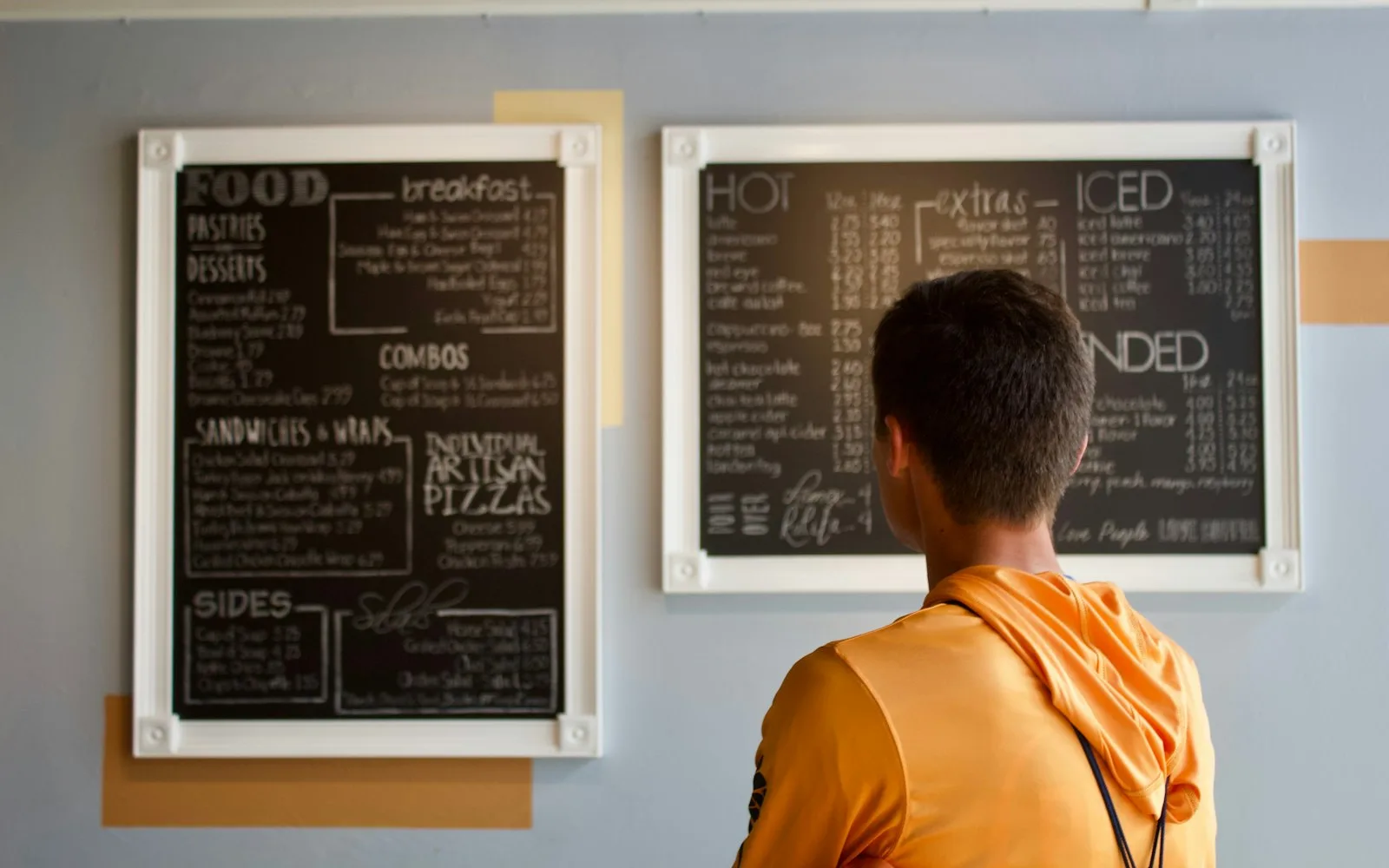
Most restaurants treat the menu board as a sign. It lists items, shows prices, and gets updated once a year when the print shop sends a proof. But a board that just displays the menu is doing half a job. The screen every guest stares at while they decide is the single most valuable piece of real estate in your dining room — and if it isn't actively selling, you're leaving money on the counter every single order.
This is the core idea behind digital menu board upselling: using dynamic, well-timed screens to prompt the add-on, the combo, the size bump, or the pairing at the exact moment a guest is ready to buy. Done well, it can lift attachment sales into the 15–25% range without adding a single labor hour. Here's how the mechanics actually work, and how to set boards up so they convert.
What "attachment sales" really means
Attachment (or "attach rate") is the share of orders that include an add-on beyond the primary item. A coffee with a pastry. A burrito with chips and a drink. A ramen with an extra egg. Every one of those add-ons rides on an order you were already going to ring up, which is why attachment revenue is close to pure margin — you've already paid for the foot traffic.
The problem: attachment depends on the suggestion. A guest who wasn't prompted usually won't self-upgrade. Static signage can't prompt — it just sits there. A digital board can, and that's the entire opportunity.
Why static boards leave money on the table
- They never adapt. A printed board shows the same thing at 7 a.m. and 7 p.m., even though the sell is completely different at breakfast versus dinner.
- They can't prompt an add-on. There's no way to surface "Make it a combo for $2 more" next to the item a guest is looking at.
- They rely 100% on staff to upsell. During a rush, a stressed cashier skips the suggestion — and the attach rate craters exactly when volume is highest.
- They're slow and expensive to change. Reprinting to test a new pairing costs money and days. You end up never testing at all.
How digital menu board upselling works
Digital boards convert because they turn passive display into active merchandising. A few levers do most of the work:
| Lever | What it does | Effect on AOV |
|---|---|---|
| Combo & bundle prompts | Surfaces "make it a meal" next to entrées so the drink and side attach automatically | Often the single biggest driver |
| Dynamic pairings | Shows the pastry that goes with the latte, or the dip that goes with the wings | Lifts attach on high-margin add-ons |
| Dayparting | Swaps the board's featured items and upsells by time of day — breakfast, lunch, happy hour, dinner | Keeps the sell relevant hour to hour |
| Visual "hero" merchandising | Motion and appetizing photography draw the eye to the item you most want to move | Shifts mix toward higher-ticket items |
| Scarcity & specials | "Today only" or "while it lasts" tags nudge impulse add-ons | Boosts limited-time and seasonal sales |
None of these require a bigger crew. The screen does the suggesting, consistently, on every order — including the ones your busiest cashier would have rushed through.
Where the 15–25% lift comes from
The math is quieter than it sounds. You don't need every guest to spend dramatically more — you need a few more points of attach rate across every ticket. If a fifth of orders that used to be a single item now carry a $2–$4 add-on, the average ticket climbs into that 15–25% band fast, and it compounds across every transaction, every day.
This isn't a menu-board-only phenomenon; it's the same behavioral lever behind self-service. Industry-wide, self-ordering kiosks typically lift average order value by roughly 15–30%, largely because a screen prompts add-ons with zero social friction — nobody feels judged for saying yes to a bigger size. A digital board applies that same psychology at the counter and the drive-thru.
Boards vs. relying on staff to upsell
Every operator has heard "just train the team to upsell." It works — until it doesn't. Turnover resets the training. Rush hours kill the discipline. New hires forget the script. Human upselling is real, but it's inconsistent by nature, and inconsistency is what quietly caps your attach rate.
A digital board never forgets, never gets flustered, and never skips the suggestion because there are twelve people in line. It's the floor under your upselling — the baseline every order gets — and your staff's suggestions become upside on top of it rather than the whole strategy.
Setting up boards that actually convert
- Feature, don't list. Give your highest-margin combos and pairings visual priority. A wall of equal-weight text sells nothing.
- Prompt the add-on where the decision happens. The pairing suggestion should sit next to the item, not three screens away.
- Daypart your boards. Push breakfast bundles in the morning and shareables at night. Relevance drives attach.
- Keep prices and photos honest and current. Nothing kills trust like a screen advertising something you're out of.
- Test and measure. Change a pairing, watch the attach rate, keep what works. Digital makes this cheap — use it.
How INFI DISPLAY ties signage to AOV
This is exactly where INFI's digital menu boards and customer displays come in. INFI is The Restaurant Growth Platform — your POS runs the register, INFI runs your growth. DISPLAY sits on top of whatever POS you already use (Square, Toast, Clover, Lightspeed, HungerRush), so your boards stay in sync with real menu and pricing while doing the merchandising work static signage can't.
Because DISPLAY is part of one connected platform, you can run consistent merchandising across every surface a guest touches — the menu board, the customer display at checkout, and self-ordering kiosks. The results show up in the ticket: PJ's Coffee saw a +45% average order value, Juice Press lifted +15% per order, and Oak View Group venues doubled basket size. Signage stops being a cost line and becomes an engine for AOV growth. More than 1,800 restaurants run on INFI.
INFI was founded by Lucas Liu, Ph.D., a former restaurant operator, on a simple mission: reduce labor strain, elevate the guest experience, and preserve each brand's uniqueness. If your menu boards are still just displaying the menu, they're the fastest place to reclaim revenue you're already leaving behind. See how DISPLAY fits your operation across the whole platform — Book a Demo or reach us at 888-857-9831.
See what INFI can do for your restaurant
Add self-ordering, online ordering, loyalty, and marketing on top of the POS you already run.
Book a Demo