
Digital Menu Board Cost for Small Restaurants (2026)
Digital menu board cost for small restaurants in 2026: real price ranges for screens, players, software, and install — plus hidden fees to avoid.
If you're pricing out a digital menu board for a small restaurant, the honest answer is that "cost" is really five separate line items stacked together — and the sticker price you see advertised usually covers only one of them. This guide breaks down what you actually pay in 2026, where the money hides, and how to size the spend to a small operation instead of a chain.
Short version: a single-screen setup done well typically lands somewhere in the low hundreds to just over a thousand dollars up front, plus a small monthly software fee. The spread comes from the choices below.
What goes into digital menu board cost
Every digital menu board is the same four or five parts, whether you buy a bundle or piece it together yourself:
- The display — a commercial-grade screen rated for long daily run times. Consumer TVs are cheaper but aren't built for 12-plus hours a day and often void their warranty in commercial use.
- The media player — a small device (or built-in system-on-chip) that runs your menu. Some smart displays skip this; a separate player is usually more reliable.
- The mount — landscape or portrait, plus the cabling to hide it.
- The software — the app that designs, schedules, and updates your menu, usually billed monthly per screen.
- Installation and content design — mounting, wiring to power and network, and building the actual menu layout.
Typical price ranges in 2026
These are general industry ranges, not INFI prices — your real number depends on screen size, brand, and who does the install. Treat them as planning brackets:
- Commercial display (32"–55") — roughly $300–$1,500 per screen. Bigger and brighter costs more; 43" is a common sweet spot.
- Media player — roughly $100–$500, sometimes bundled or built in.
- Mount and cabling — roughly $30–$150; portrait mounts run a bit higher.
- Software subscription — roughly $10–$40 per screen each month, usually the only recurring cost.
- Install and content setup — roughly $100–$500, or close to zero if you do it yourself.
Add it up and a first screen typically runs a few hundred to roughly $1,500 all-in, then a modest monthly fee after that. A second or third screen costs less each time, because the design work and account are already done.
One-time vs. recurring — the part people miss
The hardware is a one-time buy. The software is forever. When you compare quotes, separate the two, because a "cheap" board with a high per-screen monthly fee can cost more over three years than a pricier one with flat software.
Do the math: multiply the monthly software fee by the number of screens, then by 36 months. That three-year figure is often larger than the hardware itself, and it's where the real difference between vendors lives.
How many screens does a small restaurant actually need?
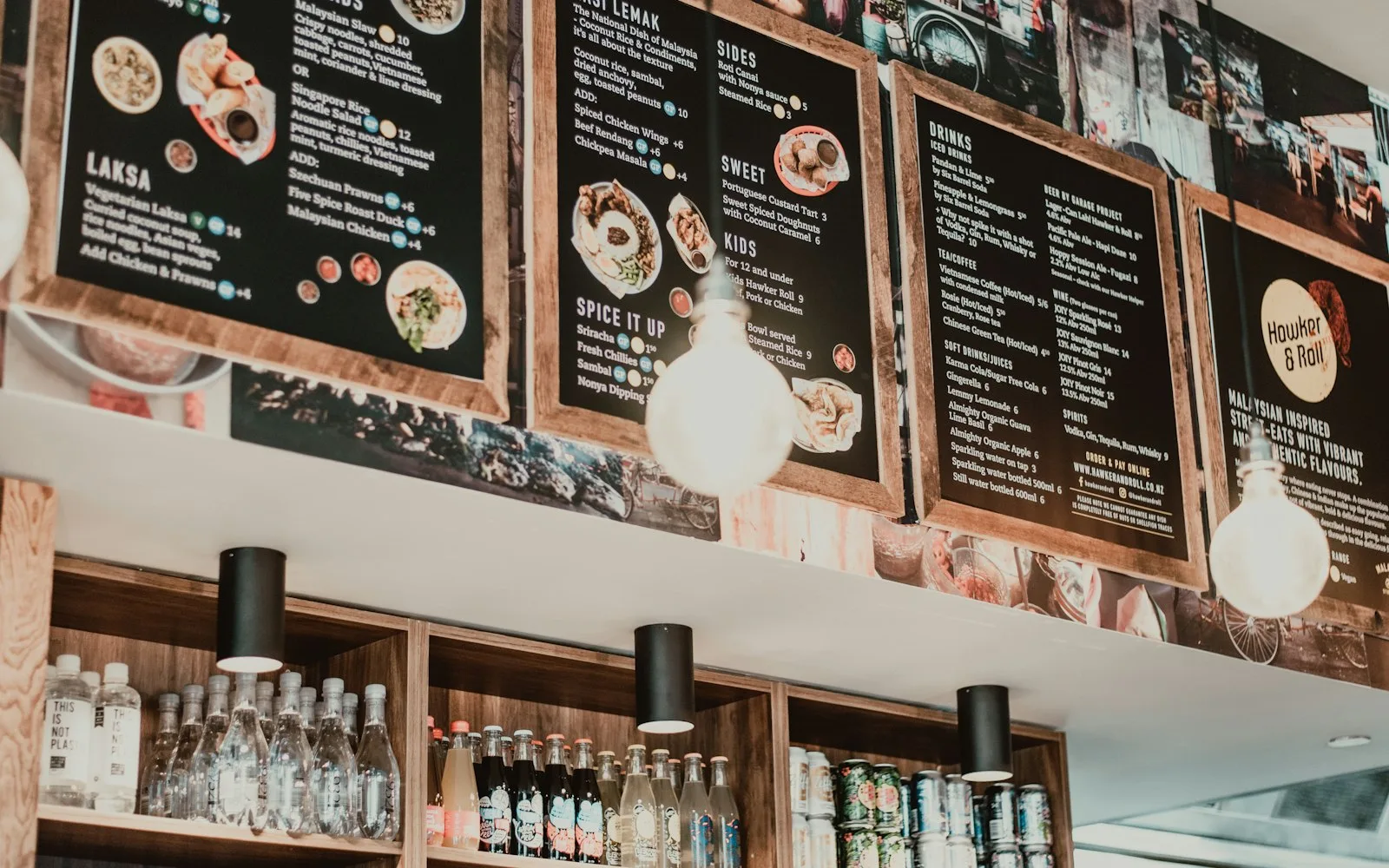
Most independents over-buy here. A counter-service spot usually needs one to three screens above the register — one for mains, one for drinks and combos, one for specials or a rotating promo. A single well-designed 43" or 55" display often does the job of two smaller ones.
Start with the minimum that shows your full menu without crowding, then add screens once you see which content earns its space. Screens are cheaper to add later than to remove.
Hidden costs to watch for
- Per-screen license creep — fees that quietly scale as you add displays.
- Design lock-in — paying a designer every time you change a price, instead of editing it yourself in minutes.
- Proprietary hardware — players that only work with one vendor's software, so switching means re-buying everything.
- Network and warranty gaps — a consumer TV that fails at month 14 with no commercial coverage.
Do digital menu boards pay for themselves?
They can, but be precise about how. A board's return comes from cleaner presentation, easy day-parting (breakfast vs. dinner), and putting high-margin combos and add-ons in front of guests at the moment they order. On the display alone, the lift is real but modest.
The bigger revenue swing usually comes when the menu board is part of an ordering system rather than a standalone screen. Self-ordering flows, for example, typically raise average order value by roughly 15–30% because upsells are consistent and never rushed. If a menu board can share content and pricing with your self-ordering kiosks and online ordering, one price change updates everywhere — and the board stops being just a sign and becomes part of the sale.
Where INFI fits
INFI's digital menu boards and customer displays (DISPLAY) are built to sit on top of the POS you already run — Square, Toast, Clover, Lightspeed, or HungerRush. Your POS still runs the register; INFI runs the screens, the kiosks, the online menu, and loyalty from one place, so you push a menu change once instead of redoing it display by display. That shared-content approach is usually where the per-screen and per-change costs quietly disappear.
Because it's one platform rather than a stack of disconnected vendors, you don't pay twice to keep the same menu in sync. Among the results INFI operators have seen across the platform: PJ's Coffee raised average order value 45%, Juice Press lifted per-order value 15%, and Oak View Group venues doubled basket size — with more than 1,800 restaurants now on INFI.
If you want a straight, itemized number for your specific screen count and POS — no bundle guesswork — INFI can price it with you. Book a Demo and we'll map the digital menu board cost to your actual floor. Call 888-857-9831 or email support@infi.us.
See what INFI can do for your restaurant
Add self-ordering, online ordering, loyalty, and marketing on top of the POS you already run.
Book a Demo