How Can I Improve Customer Experience in My Restaurant?
Start with the first 30 seconds. A warm greeting, a short wait, and an accurate order resolve the majority of guest complaints before they ever form. From there, recognize your regulars, make the ordering process frictionless, and close the feedback loop so small problems don’t quietly become one-star reviews.
The Gap Between What You Think Guests Feel and What They Actually Do
Most restaurant owners believe the experience they’re delivering is better than what their guests actually feel. Hard work behind the scenes isn’t always felt at the plate. That gap, between intention and perception, is where reviews get written, where regulars stop returning, and where word-of-mouth either builds or breaks a business.
The good news: most of the fixes aren’t expensive or complicated. A few targeted operational changes to how your team greets guests, manages wait times, and follows up after the meal can shift the entire experience.
These 13 tactics cover the full arc of a guest’s visit, from the moment they walk in to the moment they leave a review. Each one is specific and something you can act on this week.
1. Own the First 30 Seconds
The greeting sets every expectation that follows. Guests who feel noticed at the door are more forgiving of small hiccups later. Guests who feel ignored carry that friction through the entire meal.
Train your host or whoever is nearest the door to make eye contact and acknowledge every guest within 10 seconds of entry. One fast casual operator we work with made this a literal part of their opening checklist. The greeting costs nothing but the absence of it costs a lot.
2. Make Wait Times Visible
Uncertainty is what actually drives guest frustration during a wait. A clear, honest estimate even when the news isn’t great turns frustrated guests into patient ones.
Post a visible queue time near the entrance during peak hours. Use a whiteboard, a small display, or have the host communicate it directly. Guests prepared for a 25 minute wait tend to relax into it. Guests who feel strung along tend to leave and post about it.
3. Speed Up the Ordering Process
Every minute between sitting down and placing an order is a minute guests are forming an opinion about your service. Long waits to order, especially during peak hours, rank among the most common CX complaints in restaurant reviews.
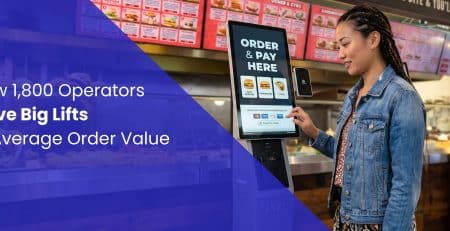
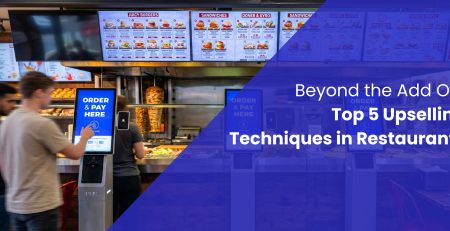
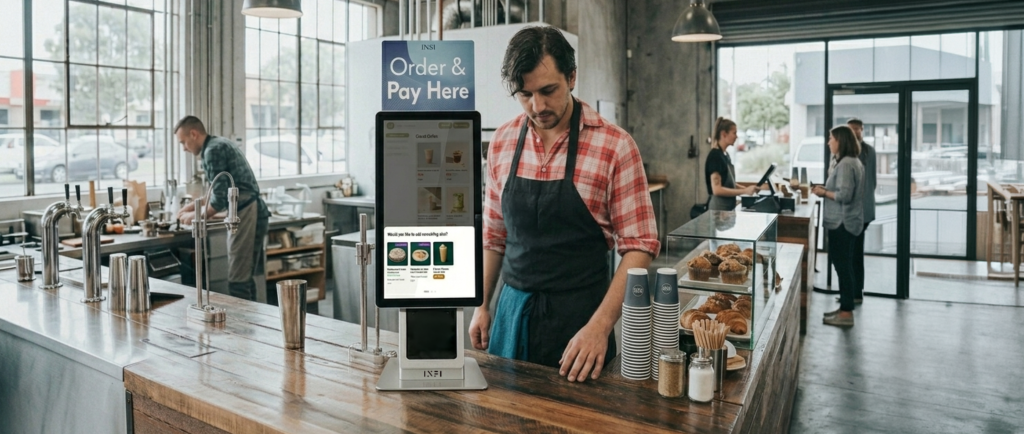
Self-ordering kiosks solve this without adding staff. Guests order at their pace, modifiers are captured accurately, and your team focuses on food and hospitality. AI-powered cross-sell achieves a 14.84% conversion rate across ordering platforms, and orders with recommended items show an average 35.8% increase in average order value.
Check out how ordering kiosks work in sit-down restaurants
4. Reduce Menu Decision Fatigue
A menu with 80 items may feel like a bragging point to the kitchen. To a guest, it’s a source of stress. Decision fatigue is real. Too many choices slow down ordering, increase the chance of disappointment, and often push guests toward the safest (lowest-margin) item on the board.
Audit your menu with one question: What do we make best? Keep those items prominent, cut or de-emphasize the rest. Highlight 3 or 4 signature dishes at the top of each category. Guests who know what a restaurant is proud of order with more confidence and satisfaction follows.
5. Get Orders Right, Every Time
Order accuracy is the single most direct driver of guest satisfaction. A wrong order doesn’t just require a remake. With no exaggeration, it resets the guest’s trust in your entire operation. And if the server apologizes but the replacement takes 12 minutes, you’ve likely lost that table for good.
Digital ordering, whether kiosk or mobile, eliminates miscommunication between guests and staff. Modifiers and special requests are captured in the system, not on a handwritten sticky note. Fewer errors means fewer remakes and fewer reviews that start with “I specifically asked for no onions.” And the same system that protects accuracy drives revenue too, up to 30% of orders include AI-recommended items, contributing 2%–6% in incremental revenue, with top merchants exceeding 10%.
6. Recognize Your Regulars
Repeat guests drive a disproportionate share of revenue. Treating a regular exactly like a first-time visitor is a missed opportunity, and occasionally, a quiet reason they stop coming back.
You don’t need a complicated loyalty program to do this well. Start with staff awareness. A server who recognizes a familiar face and says “Back for the jerk chicken?” delivers something worth more than any points balance. Loyalty technology can formalize this, tracking guest preferences, purchase history, and visit frequency, but human recognition has to come first.
7. Train Your Staff to Solve Problems
The best guest recovery doesn’t always involve a manager, but a server who has the authority and the confidence to fix a problem on the spot. Every small complaint that requires escalation means the guest waits longer, tension builds, and the manager arrives in a situation that’s already worse than it needed to be.
Give frontline staff a clear set of tools: a comp policy, a “this is yours to fix” mandate, and real training on service recovery. The goal is a guest who feels heard and helped before they ever think about pulling out their phone.
8. Remove Payment Friction
The last thing a guest does in your restaurant shapes how they remember the whole meal. A slow checkout, a broken terminal, or a server who disappears when the check is needed can erase goodwill that took an entire visit to build.
Evaluate your current payment flow: How many steps does it take from “check, please” to out the door? Integrated payment at the kiosk or table eliminates the waiting-for-the-check moment entirely. Mobile payment options, tap-to-pay, and digital receipts all reduce friction at the exit, and a smooth exit is a powerful final impression.
9. Follow Up After the Meal
Most restaurants wait for a bad review to find out something went wrong. A simple post-visit follow-up flips that dynamic. Text or email receipts can include a one-tap feedback request, giving dissatisfied guests a private channel to tell you what happened before they post it publicly.
Even a brief “How was your visit?” at the right moment catches problems that would otherwise become reviews. The operators who handle this well don’t just collect feedback but they respond to it, which brings us to the next one.
See how kiosks create a real-time feedback channel, even in fast-casual settings
10. Respond to Every Online Review
A review response isn’t just for the person who wrote it. Every potential guest who finds your restaurant on Google or Yelp reads your responses to see how you handle criticism. A thoughtful reply to a negative review does more for your reputation than 10 positive replies to five-star praise. And be truly thoughtful. Don’t depend on some canned response.
Keep responses short and specific. Acknowledge what happened, skip the corporate non-apology, and give them a reason to come back. One direct sentence beats a paragraph. Respond within 24 hours when possible. Consistency matters more than perfection.
11. Get the Ambiance Right
Lighting, sound, and temperature are invisible when they’re right and impossible to ignore when they’re wrong. Guests rarely say “the acoustics were perfect” but they absolutely say “it was so loud we couldn’t have a conversation” or “the lighting felt like a hospital.”
Treat ambiance as a controllable variable. Adjust music volume by daypart: Quieter at lunch, livelier at dinner. Check your dining room temperature at peak and off-peak hours. Dim lighting during evening service if your fixtures allow it. These are small operational moves that shift how guests feel without changing a single thing on the menu.
12. Design for Accessibility and Inclusivity
A guest who can’t navigate your space, read your menu, or communicate their needs comfortably is unlikely to return or recommend you. Accessibility is often treated as a compliance checkbox, when it’s really a customer experience issue with direct revenue implications.
Audit your dining room for physical accessibility. Make sure menus are available in large print or digital format. Train staff on communicating with guests who have dietary restrictions, hearing impairments, or other access needs. Multilingual support at the kiosk, INFI supports up to 12 languages, ensures guests can order confidently in the language they’re most comfortable with.

13. Close the Feedback Loop
Most restaurants collect feedback and stop there, which means guests who took the time to respond never hear anything back and never feel heard. Acting on feedback, and letting guests know you acted on it, is where the real work happens.
Make the loop visible. Post on your social channels, message your loyalty members, or drop a note on the menu: “We heard you, now available in a smaller portion.” That kind of responsiveness signals that your operation is listening and evolving. No discount program manufactures that kind of loyalty.
Ready to See What a Better Guest Experience Actually Looks Like?
INFI helps restaurant operators increase average ticket size, speed up ordering, and build the kind of guest relationships that turn first-timers into regulars. If you’re ready to see what that looks like in your restaurant, let’s talk.
Frequently Asked Questions
What is the most important factor in restaurant customer experience?
Order accuracy and the greeting are the two factors guests mention most in negative reviews. A guest who feels welcomed at the door and receives exactly what they ordered leaves satisfied regardless of most other variables. Fix those two before investing anywhere else.
How do I improve customer experience in a restaurant on a small budget?
The highest-impact changes are free: train your staff to acknowledge every guest within 10 seconds, give servers authority to resolve small complaints without escalating, and respond to every online review within 24 hours. Consistency is key here.
How do kiosks improve the guest experience in a restaurant?
Self-ordering kiosks reduce wait times, improve order accuracy, and let guests customize their order without pressure. They also free your staff to focus on hospitality rather than order-taking, which shifts the energy on the floor. Restaurants using INFI’s platform consistently see average ticket increases alongside faster throughput, the two outcomes tend to move together.
What do restaurant guests complain about most?
Long waits, wrong orders, and feeling ignored are the three most common complaints across review platforms. Each one is fixable through operational changes: visible wait times, digital ordering to capture modifiers accurately, and staff training focused on acknowledgment and recovery.
How do I get more positive reviews for my restaurant?
Ask at the right moment. A post-visit text or email with a one-tap feedback prompt sent within an hour of the meal catches guests while the experience is fresh and gives satisfied guests an easy path to leave a review. Most guests rarely review on their own initiative. Make it frictionless and timely.
How do I handle negative restaurant reviews?
Respond within 24 hours, acknowledge the specific complaint, and offer a path to resolution without turning it into a public negotiation. One clear, human sentence beats a paragraph of corporate language. The goal is to show future guests, who are reading your responses, that you take feedback seriously and handle it with care.