
Static vs. Digital Menu Boards: When the Upgrade Pays Off
Digital vs static menu board: real costs, upkeep, and the exact signals that tell you when upgrading from a printed board actually pays off.
If you run a counter-service restaurant, café, or quick-serve spot, the menu board above your register is doing more work than almost anything else in the room. It sets expectations, steers what people order, and quietly shapes your average ticket. So the question of digital vs. static menu board isn't really about screens versus paper — it's about what that board is costing you and what it could be earning you.
This is a plain-English breakdown for operators who currently run printed boards and are trying to figure out whether the upgrade is worth it. No hype — just the trade-offs, the math, and the specific signs that tip the decision.
The two options, in plain terms
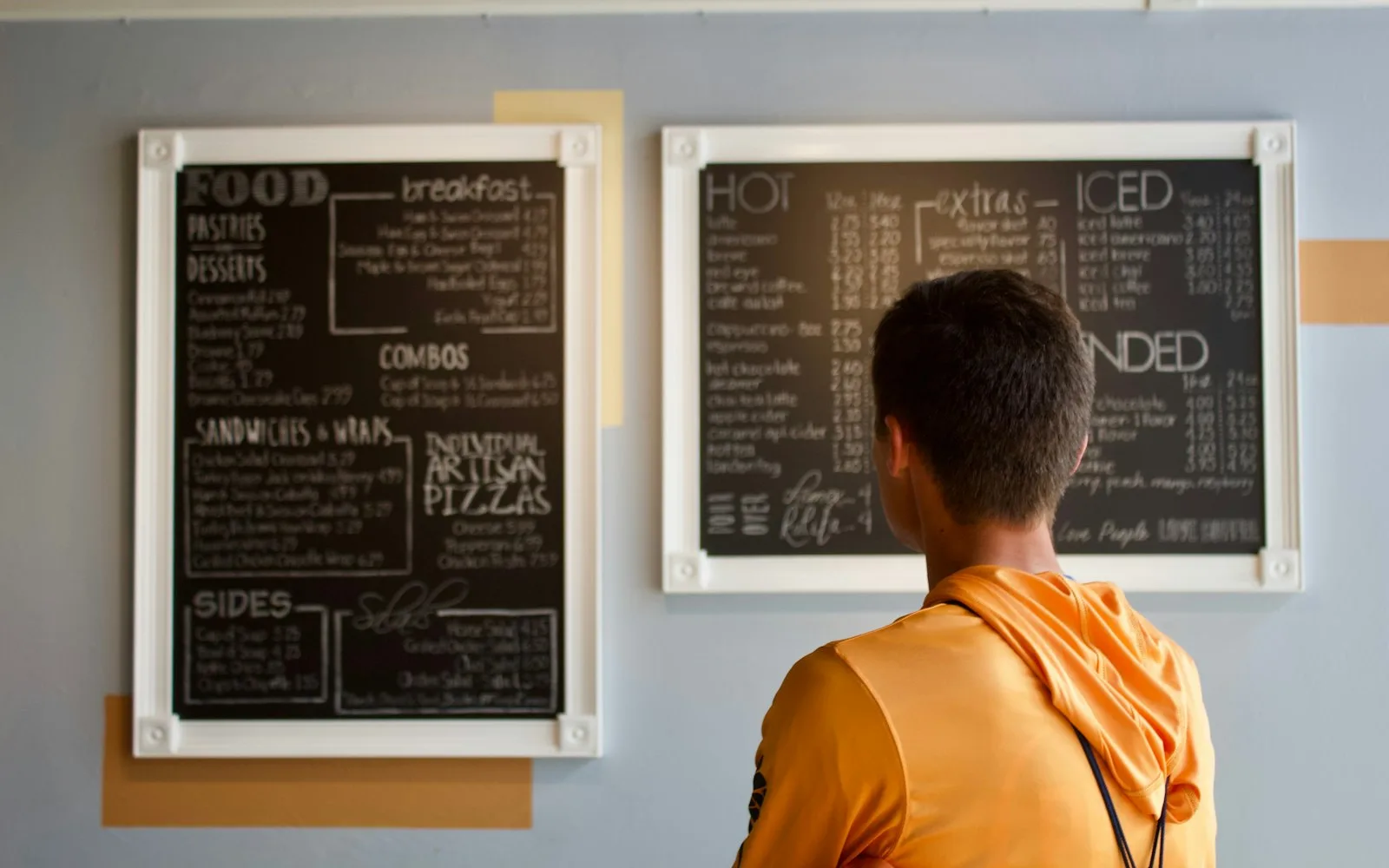
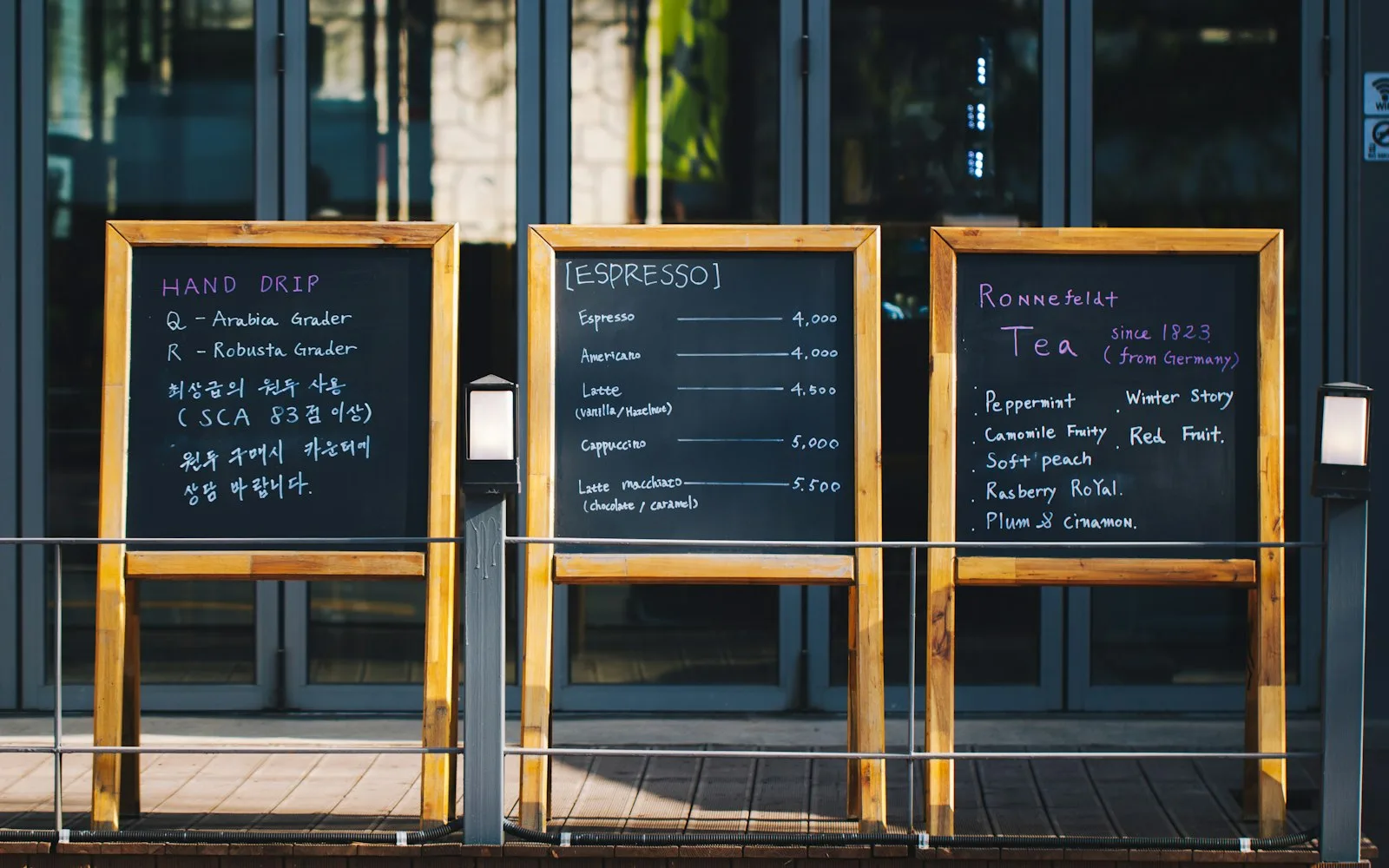
A static menu board is a printed panel — vinyl, foam board, backlit acrylic, or a chalk/letterboard. You design it, print it, mount it, and it stays exactly as printed until you swap the panel.
A digital menu board is a screen (or a wall of them) driven by software. You update prices, items, photos, and dayparts from a dashboard, and the display changes in seconds. Same wall space, very different flexibility.
What a static board actually costs you
The sticker price of a printed board looks cheap, and that's the trap. The real cost lives in everything that happens after the first print.
- Reprints. Every price change, new item, or seasonal LTO means a new panel. A fresh printed board typically runs anywhere from a few dozen to a few hundred dollars per panel, plus design time.
- Lag. A raised price or a sold-out item can sit wrong on the wall for days or weeks until the next reprint cycle — which is either lost margin or a frustrated guest at the register.
- Dead space. A static board can't run a slow-Tuesday combo at 2pm and switch to dinner at 5pm. You're stuck showing one version of your menu to every daypart.
- No merchandising. Printed boards rarely have room to feature high-margin add-ons, so upsells depend entirely on staff remembering to ask.
None of that shows up on an invoice, which is exactly why printed boards feel cheaper than they are.
What a digital board changes
Digital menu boards fix the update problem first — change a price once and it's live everywhere. But the bigger shift is that the board becomes an active merchandising tool instead of a static poster.
- Instant updates across every screen, no reprint, no ladder.
- Dayparting — breakfast in the morning, the full menu at lunch, a featured combo during the slow hours — automatically.
- Appetite appeal — bright photos and motion draw the eye and nudge higher-margin choices.
- 86'd items disappear in a tap, so guests never order what you're out of.
The upside isn't just convenience — it's a bigger ticket. Guest-facing ordering surfaces that merchandise well tend to lift the average order: self-ordering kiosks, the digital board's close cousin, typically raise average order value by roughly 15–30% across the industry. INFI operators have seen guided ordering pay off directly — Juice Press added 15% per order and PJ's Coffee lifted average order value 45% — and a digital menu board works the same angle, using photos and featured items to steer guests toward higher-margin choices.
Digital vs. static menu board, side by side
- Upfront cost. Static: low per panel. Digital: screen plus software, so higher on day one.
- Cost to update. Static: a reprint every time. Digital: free, instant, unlimited.
- Speed of change. Static: days to weeks. Digital: seconds.
- Dayparting. Static: not possible. Digital: automatic.
- 86'd items. Static: stays on the board. Digital: removed in a tap.
- Upsell and merchandising. Static: limited. Digital: featured items, photos, combos.
- Ongoing effort. Static: manual reprints. Digital: dashboard edits.
When a static board is still the right call
The upgrade doesn't always pay off, and it's worth being honest about that. A printed board is perfectly fine when:
- Your menu almost never changes and your prices are stable.
- You run a single simple concept — a handful of items, one daypart.
- A chalk or letterboard aesthetic is your brand and guests expect it.
- You genuinely can't run power or mount a screen where the menu needs to live.
If that's you, keep the paper. There's no prize for over-engineering a board that already does its job.
When the upgrade pays off
Here are the concrete signals that a digital board will earn back its cost — usually faster than operators expect:
- You change prices, sell out of items, or run LTOs more than a few times a quarter.
- You have distinct dayparts and want to show different menus at different times.
- You're leaving upsells on the table because your board has no room to feature them.
- You run multiple locations and want every board to stay consistent from one dashboard.
- Your printed reprint bill is quietly adding up to real money each year.
The break-even math is simple: add up a year of reprints, design time, and the margin you lose to wrong prices and missed upsells. If that number rivals the cost of a screen, the digital board pays for itself — and everything after is upside.
A board is one screen in a bigger system
Here's the part printed-board operators tend to miss. Once your menu lives in software instead of on vinyl, the same menu data can drive more than the wall. It can power self-ordering kiosks, your online ordering page, and your loyalty program — all showing the same prices and the same 86'd items, updated once.
That's the real reason the digital-vs-static question matters. A static board is a dead end; a digital menu board is the front edge of a connected ordering system that keeps working while you're busy running the shift.
The bottom line
Static boards win on simplicity and up-front cost. Digital boards win the moment your menu moves, your dayparts differ, or your reprint bill starts to sting. For most growing operators, the upgrade isn't an if — it's a when.
INFI is the restaurant growth platform: your POS runs the register, and INFI runs your growth on top of it. Our digital menu boards and customer displays plug into the same system as kiosks, online ordering, and loyalty — one menu, everywhere — for 1,800+ restaurants and counting. Want to see whether the upgrade pencils out for your shop? Book a Demo or reach us at 888-857-9831.
See what INFI can do for your restaurant
Add self-ordering, online ordering, loyalty, and marketing on top of the POS you already run.
Book a Demo