

Multi-unit operators know how to grow. Replicating the standard across locations is where things break down.
Opening a second location looks like success from the outside. Inside, it means splitting your best manager’s attention, retraining a new crew from scratch, and hoping the guest experience holds. The third location compounds that. The fourth? Well, you get it.
That pattern eventually costs you your best people, your operational standards, and your margins a little more with every lease you sign.
The good news: It’s a solvable problem, but it requires a different approach to scaling.
Most restaurant growth models are built on people. A great shift lead here, a reliable cashier there. That model works with one location and full control. It breaks across four locations and a team spread across two cities.
Staff dependency is the silent margin killer. When throughput, upsell execution, and guest experience all hinge on who showed up that day, results become unpredictable. The operator running a tight ship at location one watches location three drift because she can’t be everywhere at once.
Reduced labor costs are a goal for most operators. Reduced labor risk is the more urgent problem. Ask yourself: what happens to your guest experience when your best cashier calls in sick?
The operators who scale well share one trait: They’ve moved much of the guest experience out of individual employees’ hands and into systems. Better tools mean the quality of interaction no longer hinges on individual performance on any given shift.
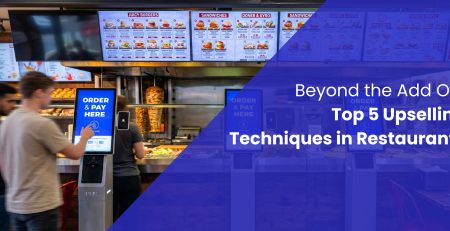
Self-ordering through kiosks handles the transactional layer consistently. Every order is taken the same way. Every modifier is captured accurately. The line moves regardless of who’s behind the counter, boosting throughput and minimizing the human error that slows kitchens down.
The staff hours you recover go back to the floor in high-value roles: kitchen fulfillment, quality control, and hospitality. When front-of-house order-taking shifts to self-service, operators consistently report meaningful reductions in labor spend and fewer scheduling gaps that hurt the guest experience.
That consistency across every location turns opening the next unit into a straightforward replication exercise.
Multi-unit expansion requires operational consistency. Managing disjointed menus across five, ten, or twenty locations creates administrative bottlenecks that slow everything down.
INFI integrates directly with enterprise POS systems. One menu change in the console pushes across every location at once. A limited-time item launches everywhere simultaneously. An out-of-stock ingredient disappears from every kiosk before the next guest orders it.
True Combo Logic matters here, too. Competitor workarounds push complex modifier selections to the kitchen in a format that creates fulfillment errors. INFI routes every modifier combination correctly to the back of house, every time, at every location. That accuracy gap compounds quickly when you’re running volume across multiple units.
When a brand scales its digital ordering operations, centralized menu control is the infrastructure that makes the whole model work.
Scalability requires top-line revenue growth alongside cost reduction.
Human cashiers forget to upsell. They get busy, they’re new, they’re having a rough shift. INFI’s AI-powered upsell delivers consistent, visually rich prompts on every single transaction like add-ons, premium modifiers, drinks, and sides, regardless of who is working the floor. The system doesn’t have ‘off’ days.
That consistency produces results. INFI operators see an average 25% increase in check sizes across the kiosk channel. The AI upsell feature drives approximately 18% of that ticket lift on its own, firing on every transaction without a reminder, a training refresher, or a manager standing over the terminal.
Standard POS reporting doesn’t show you which recommendations are converting. INFI’s cross-sell reports do. Know what’s working, and replicate it across every unit.
Scaling without stretching your staff comes down to four decisions made early:
The operators who scale successfully stop relying on heroic individual effort to hold things together. A great manager is an asset. A system that makes every manager more effective is a structural advantage.
INFI works alongside your team from implementation through ongoing optimization. Proven playbooks, hands-on guidance, and a real person to call when something needs adjusting.
Planning your next location and wondering how to hold the standard you’ve built? The infrastructure question deserves an honest answer before you sign the lease.
Book a walkthrough with the INFI team and see how other multi-unit operators are building restaurants that scale without the stretch
INFI
We firmly believe that the internet should be available and accessible to anyone, and are committed to providing a website that is accessible to the widest possible audience, regardless of circumstance and ability.
To fulfill this, we aim to adhere as strictly as possible to the World Wide Web Consortium’s (W3C) Web Content Accessibility Guidelines 2.1 (WCAG 2.1) at the AA level. These guidelines explain how to make web content accessible to people with a wide array of disabilities. Complying with those guidelines helps us ensure that the website is accessible to all people: blind people, people with motor impairments, visual impairment, cognitive disabilities, and more.
This website utilizes various technologies that are meant to make it as accessible as possible at all times. We utilize an accessibility interface that allows persons with specific disabilities to adjust the website’s UI (user interface) and design it to their personal needs.
Additionally, the website utilizes an AI-based application that runs in the background and optimizes its accessibility level constantly. This application remediates the website’s HTML, adapts Its functionality and behavior for screen-readers used by the blind users, and for keyboard functions used by individuals with motor impairments.
If you’ve found a malfunction or have ideas for improvement, we’ll be happy to hear from you. You can reach out to the website’s operators by using the following email Marketing@INFI.us
Our website implements the ARIA attributes (Accessible Rich Internet Applications) technique, alongside various different behavioral changes, to ensure blind users visiting with screen-readers are able to read, comprehend, and enjoy the website’s functions. As soon as a user with a screen-reader enters your site, they immediately receive a prompt to enter the Screen-Reader Profile so they can browse and operate your site effectively. Here’s how our website covers some of the most important screen-reader requirements, alongside console screenshots of code examples:
Screen-reader optimization: we run a background process that learns the website’s components from top to bottom, to ensure ongoing compliance even when updating the website. In this process, we provide screen-readers with meaningful data using the ARIA set of attributes. For example, we provide accurate form labels; descriptions for actionable icons (social media icons, search icons, cart icons, etc.); validation guidance for form inputs; element roles such as buttons, menus, modal dialogues (popups), and others. Additionally, the background process scans all the website’s images and provides an accurate and meaningful image-object-recognition-based description as an ALT (alternate text) tag for images that are not described. It will also extract texts that are embedded within the image, using an OCR (optical character recognition) technology. To turn on screen-reader adjustments at any time, users need only to press the Alt+1 keyboard combination. Screen-reader users also get automatic announcements to turn the Screen-reader mode on as soon as they enter the website.
These adjustments are compatible with all popular screen readers, including JAWS and NVDA.
Keyboard navigation optimization: The background process also adjusts the website’s HTML, and adds various behaviors using JavaScript code to make the website operable by the keyboard. This includes the ability to navigate the website using the Tab and Shift+Tab keys, operate dropdowns with the arrow keys, close them with Esc, trigger buttons and links using the Enter key, navigate between radio and checkbox elements using the arrow keys, and fill them in with the Spacebar or Enter key.Additionally, keyboard users will find quick-navigation and content-skip menus, available at any time by clicking Alt+1, or as the first elements of the site while navigating with the keyboard. The background process also handles triggered popups by moving the keyboard focus towards them as soon as they appear, and not allow the focus drift outside it.
Users can also use shortcuts such as “M” (menus), “H” (headings), “F” (forms), “B” (buttons), and “G” (graphics) to jump to specific elements.
We aim to support the widest array of browsers and assistive technologies as possible, so our users can choose the best fitting tools for them, with as few limitations as possible. Therefore, we have worked very hard to be able to support all major systems that comprise over 95% of the user market share including Google Chrome, Mozilla Firefox, Apple Safari, Opera and Microsoft Edge, JAWS and NVDA (screen readers).
Despite our very best efforts to allow anybody to adjust the website to their needs. There may still be pages or sections that are not fully accessible, are in the process of becoming accessible, or are lacking an adequate technological solution to make them accessible. Still, we are continually improving our accessibility, adding, updating and improving its options and features, and developing and adopting new technologies. All this is meant to reach the optimal level of accessibility, following technological advancements. For any assistance, please reach out to Marketing@INFI.us
If you're unsure, please reach out to support@infi.us.

